Connecting – today and beyond
Connecting – today and beyond
English

Search
Products
The art of ribbonizing for efficient fiber splicing
In the world of fiber optics, efficiency and adaptability are key.
What makes ribbonizing especially valuable is its ability to transform non-ribbon fiber cables into a format suitable for ribbon splicing. This transformation unlocks faster workflows, reduces labor, and leads to more compact fiber management, making it a game-changer for both legacy systems and new deployments.
What is ribbonizing?
Ribbonizing involves bonding individual optical fibers into a flat ribbon structure. This ribbon can then be spliced using a ribbon splice machine, allowing up to 12 fibers to be spliced at once. Compared to traditional single-fiber splicing, ribbonizing significantly reduces time and labor, especially in high-volume installations.
The ribbonizing process
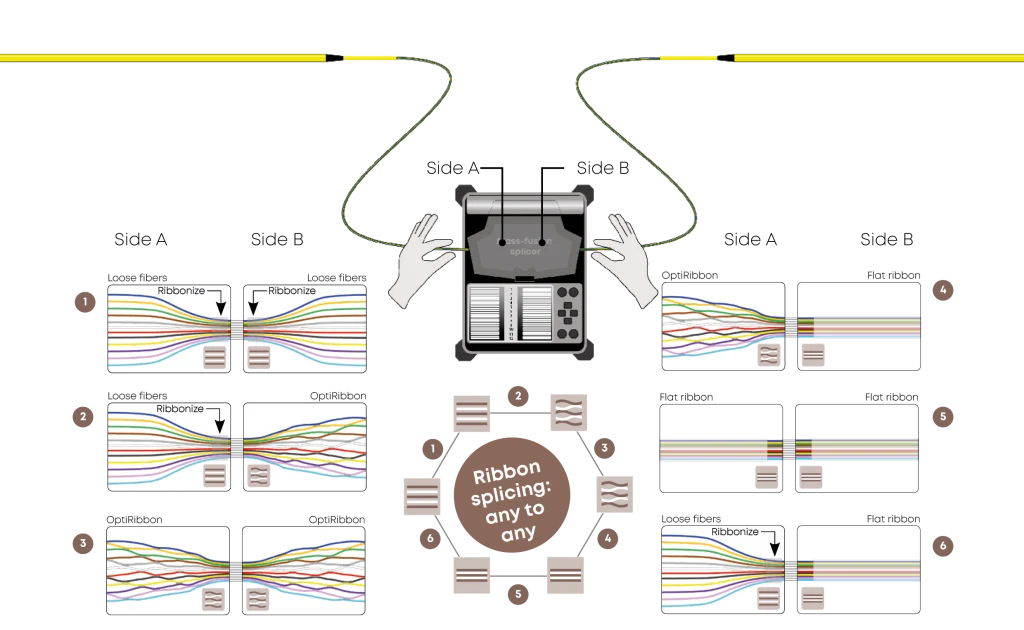
The ribbonizing workflow involves several key steps:
- Cable stripping: The outer sheath is removed to expose the fibers.
- Fiber sorting: Fibers are arranged according to a standardized color code, typically the TIA color code.
Adhesive application: A small amount of adhesive is applied to the sorted fibers, which are then held together using a ribbonizing clip. - Curing: The adhesive cures rapidly—usually within 2–3 seconds—forming a stable ribbon.
- Splicing preparation: Place ribbon in splice holder, then strip and cleave it before placing it into the splice machine.
Some suppliers offer glue-less ribbonizing tools, which further streamline the process. These tools are compatible with specific splice machines and enable dry ribbonizing without the need for adhesive.
Ribbonizing non-ribbon fiber cables
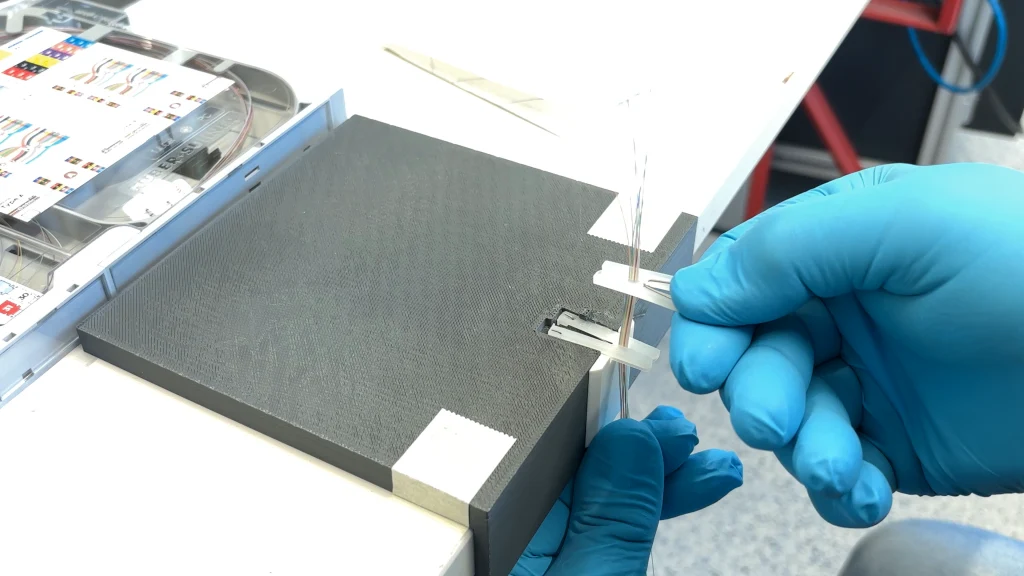
One of the most impactful advantages of ribbonizing is its ability to convert non-ribbon fiber cables into ribbon format. This means that even if a cable wasn’t manufactured with pre-bonded ribbons, technicians can still prepare it for ribbon splicing. The benefits include:
- Simultaneous splicing of multiple fibers, reducing repetitive tasks.
- Fewer splice protectors required, saving space in cassettes and modules.
- Improved fiber management in dense installations.
This flexibility makes ribbonizing a powerful tool for both legacy systems and modern deployments.
Benefits of ribbon splicing
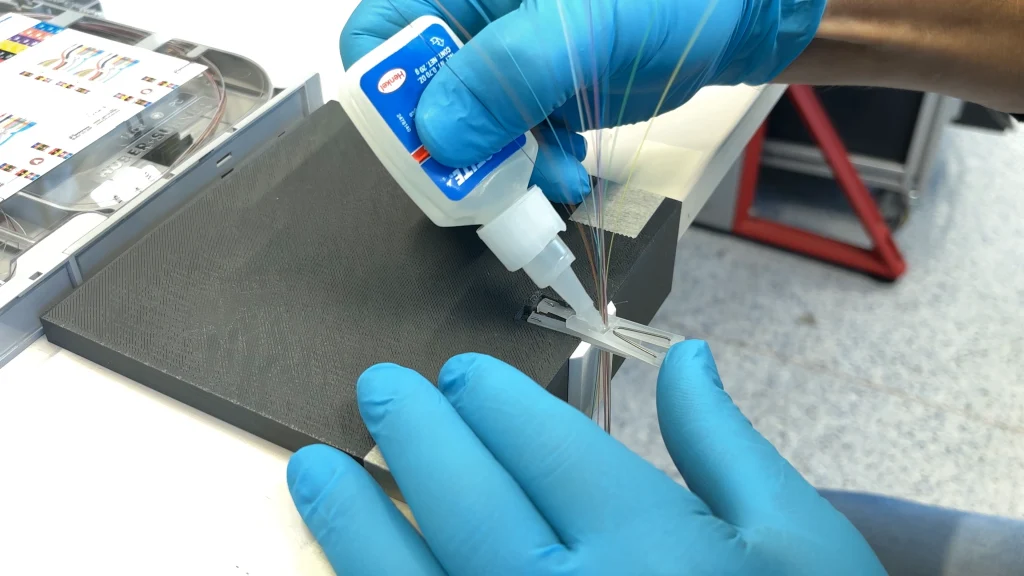
Ribbon splicing offers several operational advantages:
- Speed: Splicing 12 fibers at once can be up to twice as fast as single-fiber splicing.
- Space efficiency: Ribbon splice protectors reduce the number of protectors needed, optimizing storage.
- Scalability: Ideal for large-scale fiber networks.
- Versatility: Works with both ribbon and non-ribbon cables when ribbonizing is applied.
Conclusion
Ribbonizing is more than a technical procedure—it’s a strategic enhancement for fiber optic networks. By enabling ribbon splicing on non-ribbon cables, it expands access to high efficiency splicing and simplifies fiber management. Whether you're working with legacy infrastructure or deploying new systems, ribbonizing offers a practical path to faster, cleaner, and more scalable fiber installations.
Watch the video to learn about the ribbonizing process
Related blogs








Get in touch
Do you have questions?
We will gladly assist you. Send us a message or find your local contact:
Contact formGo to contact form
Locations worldwideSee locations