Connecting – today and beyond
Connecting – today and beyond
English

Search
Products
How "Digital India" connects nearly a billion rural residents with solutions from HUBER+SUHNER
A digital revolution is underway in India, empowering the nation’s 909 million rural residents with unprecedented access to life-changing opportunities including education, employment, and telemedicine. True to its vision, Connecting – today and beyond, HUBER+SUHNER since 2012 has supplied made-in-India products and solutions essential to last-mile connectivity for the Indian government’s flagship BharatNet project.
Responsible for enabling this change are Bharat Broadband Network Limited (BBNL) and Bharat Sanchar Nigam Limited (BSNL). To guarantee last-mile connection for BharatNet, HUBER+SUHNER is supplying vital infrastructure solutions, all of which are manufactured in India. In rural and remote areas of the country, the goal is to make it possible for access providers, such as mobile operators, internet service providers (ISPs), cable TV operators, and content providers, to introduce a range of services, including applications like e-health, e-education, and e-governance.
Completely changed telecommunication
“The development of the national optical fiber network and with that access to 4G broadband connectivity has completely changed telecommunication. This came in very handy during Covid-19. Through online training, we educated people and disseminated information on managing the global pandemic,” said Dr. H.S. Misra, a medical practitioner in Gurgaon, India. “I'm grateful for technology! Doctors operating in remote areas of India have benefited greatly from the fibre optic network since it allows them to share medical information with specialists in larger towns and seek their advice on diagnosis and treatment.”
A flagship project of the Government of India (GOI), BharatNet is one of the biggest rural telecommunications initiatives in the world, aiming to equip all telecom service providers in India's more than 250,000 gram panchayats (village councils). In other words, all 625,000 Indian villages will get accessible broadband connectivity-through 4G base tower stations to BharatNet, whereby commercially non-viable wi-fi hotspots will be subsidised by a union government grant. The project supports the nation's *Digital India* strategy to turn the country into a knowledge economy and technology-empowered society.
Remarkable progress
By connecting gram panchayats to block headquarters using existing fiber and progressively laying new fiber to bridge connectivity gaps to the gram panchayats, BharatNet Phase I, approved in late 2011, set the stage for creating a national optical fiber network providing broadband connectivity at the gram panchayat level.
The second phase of the project aimed to integrate the experience from the first phase and align it with the vision of "Digital India", including last-mile connectivity via wi-fi or other broadband technology. As of October 2024, around 690,000 km of optical fiber cable (OFC) had been laid for the project; 1 million fiber-to-the-home connections had been commissioned, and 104,574 wi-fi hotspots had been installed.
BharatNet offers:
- High-speed internet up to 100 Mbps per gram panchayat; internet speed can be extended to 1 Gbps per gram panchayat with minimal network upgrades
- Direct gram panchayat to state data center connectivity via government-owned fiber
- Twelve core OFCs per gram panchayat for future government and commercial use by private operators
- Government-owned and -maintained OFC network for better reliability and security
Transforming socio-economic accessibility
Alpesh Raval, Head of Institutional Sales at HUBER+SUHNER in Gurgaon, India, explained the sweeping changes that BharatNet brings to rural villagers.
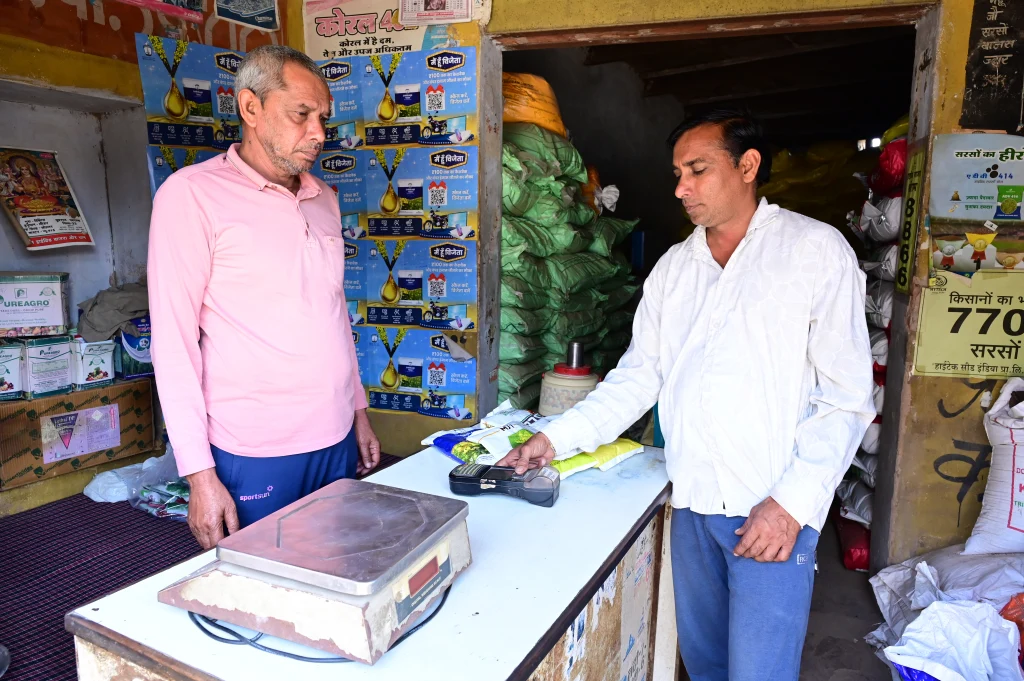
"Undergraduate and graduate students can now start their own government-supported businesses; additionally, one can easily get a birth certificate printed or apply for a passport for a nominal fee from these centers," Raval highlighted the fact that BharatNet substantially reduces the need for people to travel to distant urban centers to obtain essential government-issued documents in a vast country spanning 3.2 million square kilometres. He states: "People now have instant access to their birth certificates, medical cards, and proof of residency – everything they need to receive medical care – thanks to the digital platform."
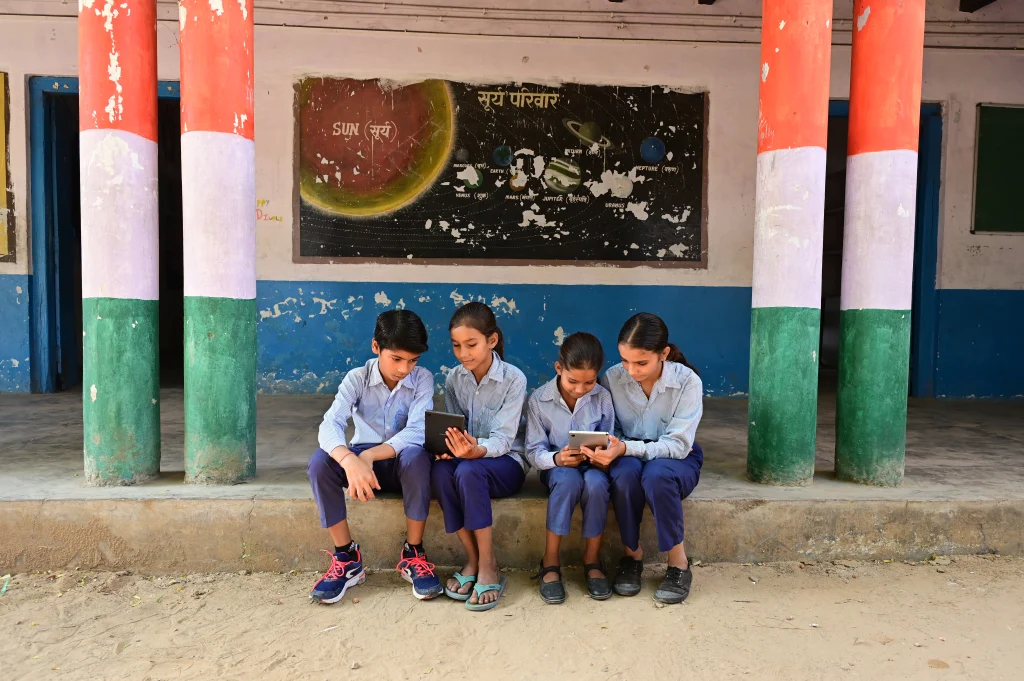
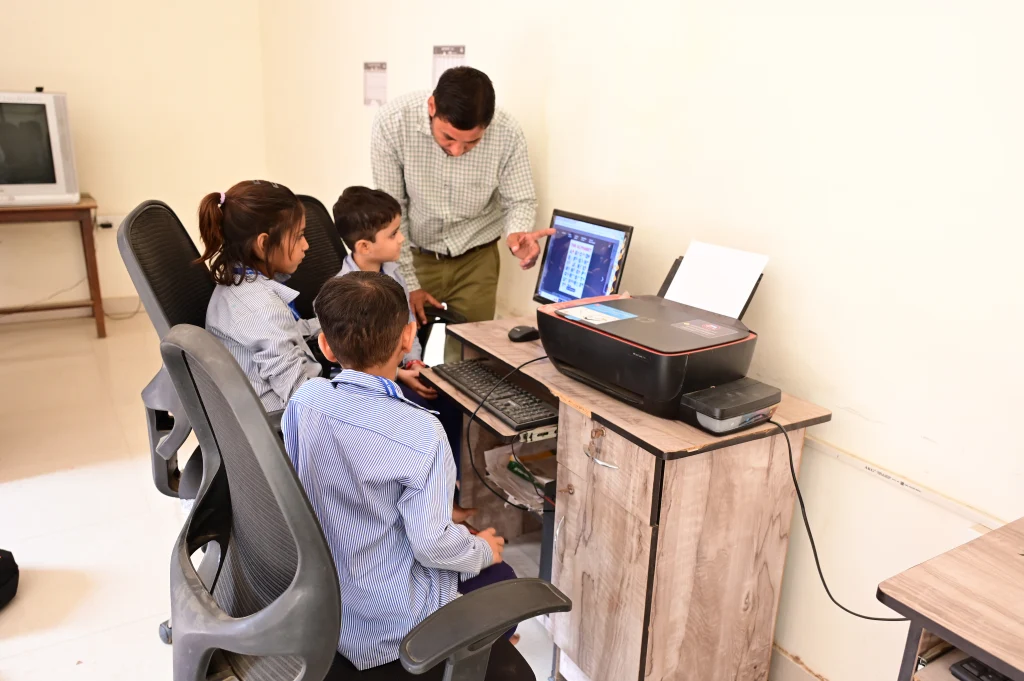
One of BharatNet’s main goals is increased access to online education. "Our students now have better digital opportunities and data access because of fiber optic networks. Instructors also have access to invaluable learning resources that we did not have before, thanks to high-speed internet connectivity,” said Jai Prakash Yadav, a school principal from Kasba Bansur, Alwar.
Becoming a knowledge society
While such advances may not seem monumental, it is widely known that education promotes employment, earnings, health, and poverty reduction. Education is, additionally, an engine of innovation, social cohesion, and even climate action.
“The availability of e-education at our doorsteps in rural India has made learning more accessible and easy with new technologies, and has provided a wider range of courses, e-books, and modules,” noted Ankit Kumar, a student in Bichpari, Sonipat, India. “Fiberisation has made feasible cooperative learning, multimedia activities, worldwide resource access, and off-site learning feasible.”
With 96 core OFCs installed throughout India as part of the "Network For Spectrum" (NFS) defense initiative, HUBER+SUHNER has proven to be a very competent partner to the country's army, navy, and air force—all of which are connected by BharatNet.
Like other HUBER+SUHNER colleagues in India, Raval is proud of the valuable contribution they are making to the nation's development. "We have put in a lot of extra efforts to complete the project, and the quality we provide is unmatched,” he said. “Here, each worker serves as a quality inspector.”
BharatNet - Expanding mobile connectivity nationwide
The Universal Service Obligation (USO) Fund was established with fundamental objective of providing access to "Basic" telegraph services to people in remote and rural areas at affordable and reasonable prices. USOF is headed by the Administrator, USO Fund who is appointed by the Central Government, for the administration of the fund. It is an attached office of the Department of Telecommunications (DoT), Ministry of Communications.
Related blogs


Get in touch
Do you have questions?
We will gladly assist you. Send us a message or find your local contact:
Contact formGo to contact form
Locations worldwideSee locations